

A $500K windfall for train museum
Walter H. Milne never married. He had no children. His relatives had all passed away.
He lived alone in a two-bedroom ranch house in Des Moines, Iowa, where he also died alone in 2013.
But with just 26 words, the Long Island native has changed the fortunes and the future of Long Island’s railroad museum.
“I give, devise and bequeath the rest, residue and remainder of my estate to the Railroad Museum of Long Island presently located in Riverhead, New York,” reads Mr. Milne’s will, filed in Des Moines in August 2008.
The value of the 78-year-old’s estate came to half a million dollars — more than triple the museum’s normal annual budget, administrators said.
“We almost fell over,” said vice president Dennis DeAngelis. “When I heard that number, there was dead silence from me and I’m not usually someone who’s at a loss for words.”
For the past two years, the museum — which recently celebrated its 25th anniversary — has been quietly selling off his assets and setting aside the money for long-needed repair jobs and other projects, Mr. DeAngelis said.
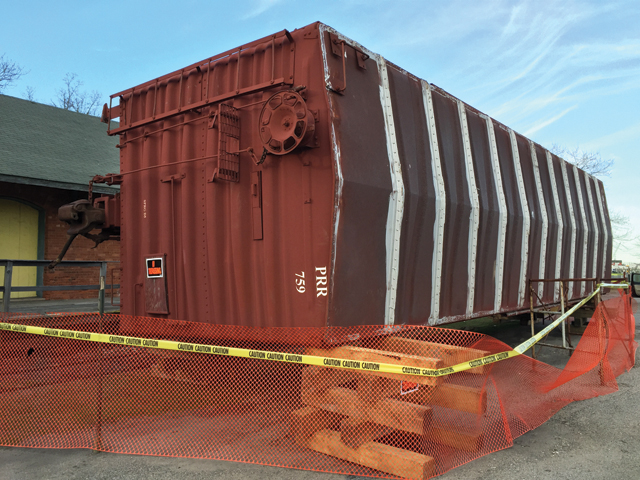
One of those projects finally came to fruition earlier this month, when $5,000 from the windfall paid for something that’s been on the museum’s wish list for more than a decade: a “beautiful” 40-foot-long boxcar to use as exhibit and storage space.
“This is like manna from heaven,” said museum president Don Fisher.
•
Mr. Milne, the museum’s surprise benefactor, grew up in Levittown, not far from the Long Island Rail Road tracks where freight trains shuffled produce and raw materials back and forth between New York City and the East End.
In those days, the LIRR was a freight operation, with few commuter trains, Mr. Fisher said.
But while others may have tired of the clatter of the trains’ flatcars, Mr. Milne fell in love.
Even after moving to Des Moines after college to work at a nearby medical school, Mr. Milne’s train fever — especially for those on the Long Island Rail Road — “never diminished,” Mr. Fisher said.
“It was his passion,” he said.
Mr. Milne signed up for membership in the railroad museum each year until the late 1990s, Mr. Fisher said. He would visit now and again to take pictures, but wasn’t well known.
Back home in Iowa, he painted model trains to look like Long Island Rail Road freight cars and sold them on eBay. His garage was dominated by a giant, expensive model train layout based on the LIRR’s Jamaica station.
“He left his entire earthly estate to the museum,” Mr. Fisher said. “It’s incredible. It really is.”
Mr. Milne was practically unknown to the museum’s volunteers, Mr. DeAngelis said.
“No one who we know at the railroad museum knew him,” he said. “We were, to put it mildly, very surprised. It came out of nowhere.”
The museum was contacted by an attorney in Des Moines about Mr. Milne’s estate, Mr. DeAngelis said.
At first, it seemed the museum would pull in about $60,000 from the sale of his house. But over the course of several months, that number ballooned to roughly $200,000.
Finally, the attorney called Mr. DeAngelis to explain there had been a mistake: Mr. Milne also has a pension fund worth hundreds of thousands of dollars that had been overlooked.
“It’s a great boon to the railroad museum,” Mr. DeAngelis said.
In August 2014, the museum board settled his possessions for about $513,000 after selling off Mr. Milne’s house and car, a Honda Element.
The funds come as a welcome boost to the museum, which for years has been running on a tight budget, its administrators putting off necessary renovations to save money.
“We’re very cautious with our finances,” Mr. Fisher said.
Mr. DeAngelis said it was the second best thing to ever happen to the museum, after the donation of a Riverhead location in 1997.
“The only money we get is from membership dues and gift shop sales,” he said. “This allows us to do things that would have taken years to get done.”
Mr. Fisher said about $100,000 of the bequest will go toward the ongoing restoration of a steam locomotive.
Roughly $200,000 was put into an endowment fund last fall. “We don’t touch that money,” Mr. Fisher said. “It grows.”
From the proceeds of the estate, the museum also put about $50,0000 into an escrow account, reserving the remaining $150,000 for capital projects.
It was from that fund that the museum’s board allocated the money for the boxcar.
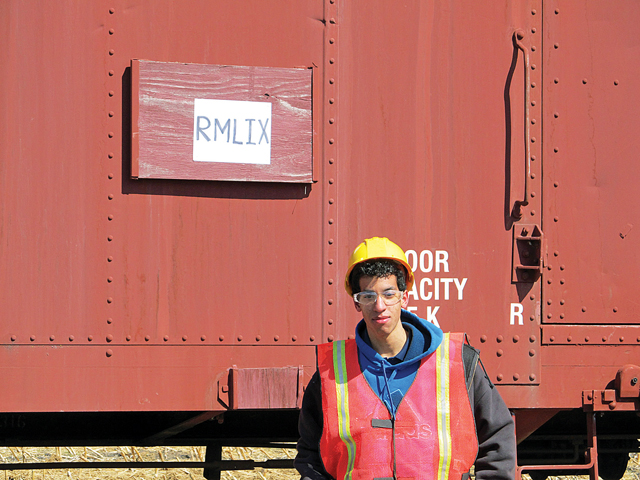
Sixteen-year-old Cameron Wolk, a sophomore at Half Hollow Hills West High School, has spent months calling railroad companies across the country searching for a boxcar.
Cameron has been a volunteer with the Railroad Museum of Long Island since 2013. In the past he’s helped with research and touched up paint at its two locations.
“All my life I’ve had an interest in railroading,” he said.
But this assignment was different.
The museum had long struggled to find a suitable boxcar to put on its track near the Greenport LIRR station.
Twelve years ago, a railroad museum in Pennsylvania offered to donate a Pacific Fruit Growers refrigerated boxcar for free. But the museum would have had to pay $10,000 to cover the moving costs, which the board determined they simply couldn’t afford, Mr. Fisher said.
Since then, there’s been space on the track at the museum’s Greenport location — the perfect spot for a boxcar to sit between the caboose and a railroad-riding snowplow and complete the set.
After months of searching, Cameron found the perfect match during spring break, while searching images online.
“It struck me immediately,” he said.
The boxcar — a deep maroon car with the Pennsylvania Railroad name painted proudly on its side — was built in 1960 and spent decades shipping clay byproducts for the American Colloid Company.
It even has a Long Island connection, having been used by the LIRR’s parent company.
The boxcar ultimately ended up on the Tioga Central Railroad, a tourist railway that twists through northern Pennsylvania. That railroad used the car as “photo freight,” a type of business model that runs restored trains along the rails for photographers to capture, Mr. Fisher said.
After years of service, the boxcar was due to be scrapped, Cameron said. So the museum agreed to pay its scrap value: $5,000.
“Every railroad museum has a boxcar,” he said. “Why not us?”
Now that it’s arrived, Mr. Fisher said, the boxcar will be placed onto the tracks between the existing cars sometime in the coming months.
It will be used as storage this summer season, with the ultimate goal of turning the interior into a theater to show museum visitors films and exhibits about the LIRR’s freight service.
The boxcar couldn’t be better, Mr. Fisher said.
“It’s perfect,” he said. “Oh my God, it’s perfect.”