

Women band together to help distressed honeybees
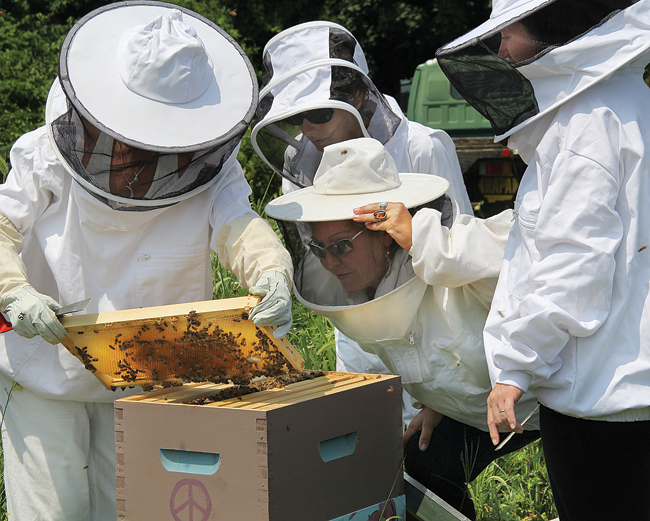
A group of women concerned about the plight of the honeybee has launched a grassroots effort to bring more bees to the area and educate locals about how to support the bee population.
They have formed the Hippy Hive HoneyBee Cooperative, a group open only to women and led by a trio of North Fork residents who are involved in spirituality, health and nature. The initiative’s members range in age from 36 to 70; some of them have experience with bees, but others had never set foot near a hive before joining.
The group now has 15 members and organizers say community interest in their effort is flourishing, leading them to explore ways to expand Hippy Hive HoneyBee Cooperative and the possibility of seeking nonprofit status.
The idea for the cooperative arose in March after participants in a women’s spirituality circle in Greenport watched a documentary called “Queen of the Sun: What Are the Bees Telling Us?” The film addressed the inexplicable disappearance of bees — a phenomenon known as colony collapse disorder — and their vital role as pollinators in securing the nation’s food supply.
More than three-quarters of the world’s flowering plants rely on pollinators like bees to reproduce, according to the U.S. Department of Agriculture. This means the tiny yellow insects help produce one out of every three bites of food.
After watching the film, circle member Diane Gunder, of River Rain Renewal Wellness in Greenport, recalled saying, “We have to do something.” Until then, she said, she’d been unaware of the bee population’s struggles.
The documentary motivated her, along with circle members Sarah Shepherd, an herbalist from Shelter Island who has kept bees for about five years, and Susanmerrie Hellerer, a beekeeper-in-training, to start the cooperative.
Ms. Gunder then reached out to Maggie Wood of Golden Earthworm Organic Farm in Riverhead, who offered space there for the group’s hives.
“Anything we can do to allow beekeepers to bring in the bees is of great interest to us,” Ms. Wood said. She and her husband, Matthew Kurek, had tried beekeeping in the past, but with all the other work at their Peconic Bay Boulevard farm, that effort fell by the wayside.
Each of the original cooperative members contributed toward building the hives, which cost about $1,000 apiece, and importing queen bees and worker bees. The group now has three hives and is working to get another.
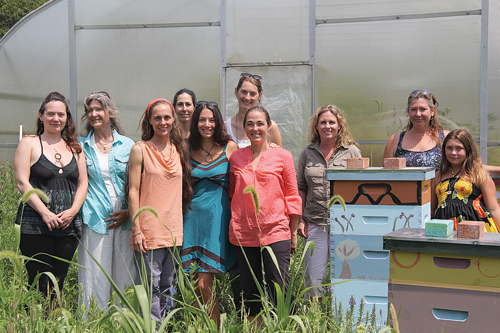
Aside from the money, the women offer their time and care by taking turns working on the hives and even colorfully painting the hive boxes, which sit beside a field of lavender.
“We really dedicated this space,” Ms. Hellerer said. “We brought seeds to sow and objects we felt were powerful or sacred to honor the space.”
To show their appreciation of the queen bees, they gave each of them a name: Maya, in honor of the late Maya Angelou; Fatima, for the Arabian goddess of the moon; and Hera, after the Greek goddess of marriage.
“It is an amazing learning experience,” Ms. Gunder said, adding that the cooperative “is not about the honey.”
In fact, the honey isn’t for sale.
The group will collect only a small amount of honey from each of the hives once a year. The sweet, sticky substance is distributed among cooperative members to use as they like; many share it with others as a way of educating the public.
“It’s really about what can we do to help, to be involved in helping to mend this problem that we have,” Ms. Gunder said. “It is such a different feeling when you’re connected to your food supply.”
According to an annual but voluntary survey of beekeepers conducted by the USDA, 23 percent of colonies nationwide were lost in 2013; losses of 30.5 percent had been reported just one year earlier. For sustainability, the USDA reports, colony losses should not surpass 18 percent.
“Yearly fluctuations in the rate of losses like these only demonstrate how complicated the whole issue of honeybee heath has become,” said survey co-author Jeff Pettis.
According to Mr. Pettis, factors such as viruses and other pathogens, parasites, nutrition deficiencies due to lack of diversity in pollen sources and the effects of pesticides combine to weaken or destroy bee colonies.
Members of the cooperative said the best way they can help is to inform others about the challenges honeybees face so that they can help spread the message, too, Ms. Hellerer said.
Here are a few ways Hippy Hive Honeybee Cooperative suggests that others in the community can make a difference:
• Grow native plants, which the bees will love.
• Don’t use insecticides containing neonicotinoid, a substance that confuses bees and makes it difficult for them to find their way back to the hive.
• Be respectful of the bees. If you don’t attempt to hurt them, they likely won’t have cause to sting you.
• Keeping bees is not cheap, so support your local beekeeper and buy local honey.
By doing these things, Ms. Hellerer said, the community can help “give bees a chance.”
Cooperative members said they are reaching out to community organizations to host educational opportunities, and have already hosted events at the Peconic Community School.
To find out more about the cooperative and its efforts, visit Facebook and search for Hippy Hive HoneyBee Co-Op.