

Latest farm purchase completes 98-acre ‘ag center’ in Southold
When Holly and Chris Browder needed help with their irrigation system or getting their field seeded, Dan Heston was there. Mr. Heston, 45, would also roll up his sleeves and delve into the dirty job of turning compost for the Browders, who were just getting started in the poultry business.
In return, the Browders supplied him with free farm-fresh eggs — and, at times, new perspectives about farming.
Such is the type of exchange that’s been going on the last few years at the Peconic Land Trust’s Agricultural Center in Southold, where Mr. Heston — owner of Salt Air Farms in Cutchogue — serves as a mentor for people trying to break into a centuries-old industry. The program offers more affordable options for would-be farmers, where they’re not only mentored, but are able to share pricey equipment, find camaraderie and, perhaps most importantly, lease small amounts of land on which to learn their trade — often, land that has been used by farmers for generations.
 “We help with anything from irrigation to field to layout to how to market their products,” Mr. Heston said. “There’s an advantage in having a few years of mentorship. Everyone thinks they know everything the first year, but the majority of questions come the second year. That’s when the growth seems to happen.
“[And] we are learning from some of these small operations that aren’t traditional,” he added, mentioning one up-and-coming farmer at the center who will be growing shiitake mushrooms on white oak logs. “They all kind of work together to complement each other’s markets, which is the whole idea.”
SEE THE MAP: How it came together
Just last month, Peconic Land Trust acquired the last of 11 parcels that now make up its 98-acre agricultural center. The purchases were made possible through several generous donations from husband-and-wife team Tom and Anne Hubbard, Southold Town’s Community Preservation Fund and former farmers who were willing to sell the development rights to their land in order to keep it in agriculture in perpetuity.
Founded in 1983, the land trust’s primary goal was to keep land in farming. The current program developed some 10 years later, after Peconic Land Trust altered its original mission to focus on keeping people in farming as well. The ag center is at the heart of that renewed effort.
See also: Raising livestock a dream come true for Southold couple
“Every one of [the novice farmers] is looking for the same thing,” said Tim Caufield, vice president of the land trust, which operates on both the North and South forks. “They’re interested in farming but don’t have enough to buy a farm.” At the ag center, he said, farmers “can develop a real business plan.”
LAY OF THE LAND
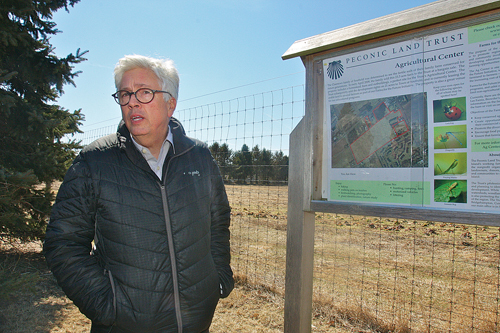
The parcels that comprise the ag center are all located near the intersection of Route 48 and Youngs Avenue.
The last of them, a 19.2-acre parcel known as the Krupski/Dickerson Farm, was acquired March 28 through an in-kind land swap with Al and Mary Krupski for 16.8 acres farther west, on Route 48 in Peconic, that the land trust already owned. The land trust also paid the Krupskis $178,000 to make up for the difference in land values.
“It was a win-win,” said Mr. Krupski, a former Southold Town Board member and current Suffolk County legislator. “We’re a lot closer to home now. It’s always good when you pass it on to another grower and I’m sure whoever uses it will have the same good fortune we did.”
Mr. Caufield said the land trust hopes to incorporate the parcel in its professional development program by leasing it out to start-up farmers. The acquisition gives the organization the flexibility to move and expand other parts of its operations as well, with one result being more space for its community garden.
The land trust will add about 20 plots to the 40 already established at the community garden, which covers about two acres on the west side of Youngs Avenue in Southold. The garden has been operating at capacity since it was established in 2010, with a diverse group of growers that includes older people fond of tomatoes, Hispanic immigrants growing chili peppers for salsa and fourth- and fifth-grade students from Southold Elementary School, who are growing corn and potatoes.
The gardeners benefit from monthly programs aimed at teaching different growing techniques and providing tips, such as how to conduct soil sampling and balance nutrients.
“Most of our gardeners come back every year — they are forming their own community here,” said Denise Markut, who leads mentoring efforts at the community garden as stewardship manager. “They are loving their individual piece of the land — and that’s what any community garden hopes will happen.”
The hope is that some of the gardeners might progress to larger growing operations — joining others in the ag center’s young farmer program. Those “young farmers” typically lease one or two acres their first year, with the potential to plant up to five acres, Mr. Heston said.
While the land trust has acreage available for rent elsewhere on the East End, being part of the more centralized ag center gives participants access to often expensive tools and infrastructure like on-site irrigation and deer fencing. Participants also have nearly around-the-clock access to experienced farmers who are on hand to provide guidance during the inevitable rough patches that come before a successful harvest.
Young farmers who are ready to expand beyond five acres can apply to join other pros in their field by building larger operations on 60 acres at the edges of the ag center that have been set aside for use by established farmers. Fred Lee of Sang Lee Farms in Peconic is among the “pros in the field” who rent acreage at the center, Mr. Caufield said.
“If you can start small, you can grow your operation — whether you’re raising crops or animals,” said Mr. Krupski, a fourth-generation farmer. “The center gives people an opportunity to start, grow and then be able to go off on their own. The land trust deserves a lot of credit for developing the foresight to bring these aspects all together.”
A HISTORY OF STEWARDSHIP:
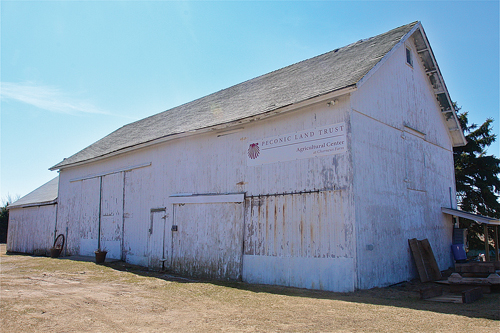
The Peconic Land Trust acquired its first parcel, the 23.4-acre Charnews family farm, in April 2008. That farm, located just south of Route 48 on the west side of Youngs Avenue in Southold, would become the cornerstone of the ag center. Its history as a working farm dates back to 1889 and the land had been owned by the Charnews family since the 1940s. The property’s historic farmhouse and barn, originally built by the Grattan family, are still in use by the land trust as storage, administrative offices and housing for farm hands who work for professional growers like Mr. Lee.
The land trust raised $700,000 for the land purchase and Southold Town bought the farm’s development rights for $1.7 million, for a total purchase price of $2.4 million. Donations from more than 80 local supporters, including the Hubbards, made the acquisition possible.
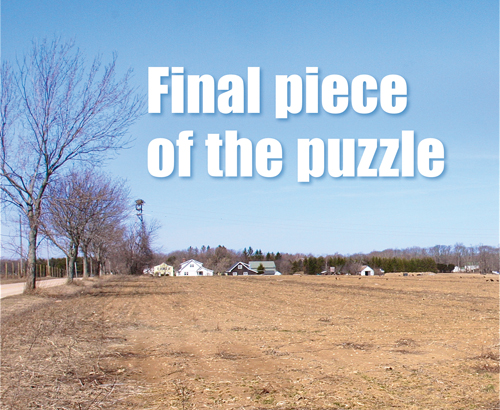
The March acquisition, the last piece of the ag center puzzle, was once the Dickerson family’s potato farm, started by Mahlon Dickerson in the 1950s. The land trust had previously acquired two neighboring parcels the Dickersons had also farmed, thereby preserving 53.2 acres — about half that family’s farm holdings.
Betsey Dickerson, Mahlon’s daughter-in-law, said the family is comforted to know the land is being used for such a good cause.
“[The family] was what you would call real stewards of the land,” she said, “and I know that my father-in-law would really appreciate it being used by others.
“They would like this idea,” she added. “All in all, farming is a very good life — if it works out.”
It’s also something many non-farmers cherish as part of the region’s history.
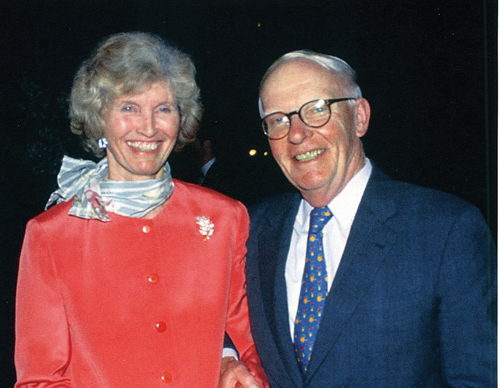
Staving off development on the North Fork has been a long-held goal of Tom and Anne Hubbard, Manhattanites who vacationed at a home in Peconic until returning full-time to the city two years ago. When traveling out to the North Fork, no matter how many times, they were always struck by the beauty of the historic Route 48 corridor after they “finally got released from the traffic as they headed east,” Ms. Hubbard said.
“This beautiful farmland — it doesn’t take long to realize that there isn’t going to be much of it left unless we do something about it,” said Ms. Hubbard. “I think to encourage younger farmers to take on this way of life and preserve the land is so very important.”
The efforts and the Hubbards and other private citizens, and the Peconic Land Trust itself, are supplemented by the work of East End town governments. Each town maintains a Community Preservation Fund, established by state law in 1996. The program uses proceeds from a 2 percent tax on real estate transfers to purchase open space and development rights on farmland properties, ensuring the land remains agricultural.
To do so, the town will often partner with land trust, which in many ways acts as a facilitator.
“I don’t think we would have had nearly the success in preservation that we’ve had — and we certainly have a very good track record for preservation — if not for the critical role that the Peconic Land Trust plays,” said Southold Supervisor Scott Russell. “[Land preservation] is all new to many people and education outreach is a key role that [it] plays for the town. It’s exceedingly important.”
And so are people like the Hubbards, he said.
“When you drive down the North Road and you see that rural corridor, in many spots you can thank the Hubbard family for the vistas you enjoy,” he said.
FARMERS OF THE FUTURE
With the final pieces of the ag center now in place, Mr. Caufield said the land trust is “cautiously optimistic” that the entire program will be financially sustainable in the years to come.
So far, the nonprofit’s sister program on the South Fork, at the 200-acre Quail Hill Farm, has been a marked success, he said.
“Over the past 25 years, [Quail Hill] has seen 150 apprentices come and go through that program and many of them have gone on to successful agricultural operations,” he said. “We hope a number of them here get a start and actually get into their own operation — hopefully here in our region and, if not, somewhere else.”
Since 2010, the land trust’s farmer-development efforts on the North Forth have already seen some success, with at least three new operations now flourishing after getting started at the ag center.
The Browders, who raised chickens on five acres at the Southold center for three years, went on to purchase 13 acres of protected farmland on Sound Avenue in Mattituck from the land trust in 2012.
They say the land trust and its mentoring program were vital in helping them get Browder’s Birds off the ground.
“We were so uneducated on what our needs were when we started,” Ms. Browder said. “If we’d had to buy a farm [without the proper training] we would have bought the wrong one.”
But Ms. Browder said she misses the camaraderie and friendship she felt daily at the ag center.
“It’s nice being around other farmers. I think what we’re going to miss the most is seeing Stephanie Gaylor,” another young farmer program participant, “or Dan Heston,” Ms. Browder said.
“The community gardeners were there, so there were always people to support you and even bring you customers,” she added.
Ms. Gaylor, who operates Invincible Summer Farms at the ag center, said there’s much value not only in the mentors, but in having other farmers to lean on.
“When you’re up against something and you don’t really know the right things to do, such as a problem with irrigation, instead of reinventing the wheel every time, you could talk to someone,” she said.
Even with the help and support, Ms. Browder stressed that the day-to-day labor, coupled with the financial strains of farming, isn’t for the faint of heart.
“The biggest challenge is how can you support yourself and make a profit, because you definitely work hard,” she said. “We’ve seen really amazing young farmers come through the program and they moved on.”